-
Most Recent Three Posts
-
Had such a great time I am headed up again today! This time with our son as my wife is at a meeting.
-
Looks like an amazing trip and a well-deserved payoff after the long remodel!! You’ve got a really great rig there, Doug—whole lot of benefits to these sturdy little RVs, really, if you don’t need tons of space and don’t mind the slightly slower pace of travel. And it’s a blast to find ways to make them better, update systems and conveniences etc, like you’ve done. Enjoy!! 👏🏼
(Baking the pizza while driving made me chuckle—I’d get a huge kick out of that myself: fun times.)
-
Well, first real trip was a success. I ran it hard for 3 hours of near wide open throttle to make it to the border Thursday evening. All secondary roads and a lot of steep, sustained hills that required 3rd gear flat to the floor for 30 seconds and sometimes more. The 22R never complained. The brakes impressed me, though all I have done is verified pad thickness, roughed up the rotors with emery cloth and bled the brakes. Took me a bit to drive the manual like a truck - lugging it a bit and discovering the higher RPMs are not fruitful. I've got manual sports cars, but this Sunrader prefers pulling with torque. After some queasiness with the body roll, I made my peace with it and got into its rhythm. Somewhere during the trip the left front shock blew its seal, which I only realized back in the drive while investigating an odd engine sound. The sound turned out to be a loose alternator belt, which is odd because I put a new one on before leaving, and everything's still tight. I think the belt they sold me is too wide and is not settling all the way into the groove, so it wore at the small surface area of contact points, loosened and is now making a whirring sound at certain RPMs.
The headlamps were stellar and I am very impressed at the Koito E code beam pattern compared to Hella E Codes. The Hellas have an 'old school' single point of brightness pattern on low beam where you have two obvious blobs of light and a nice cutoff, but darkness outside of that. The Koitos have what I'll call a 'modern' pattern on low beam like you'll see in a new car with quality lamps - a broad and bright beam pattern that goes well out to the sides and indicates real care in reflector engineering. On high beam the Koitos again are superior with farther penetration and again a more even pattern that feels like FAR more power than is actually being used. We drove behind these in full dark all secondary roads, very winding, steep hills, lots of deer and elk and mountainous terrain for a good 6 total hours this weekend, so a true test.
The rear lounge (was rear dinette) - unbelievable. The huge lounging space, the LAGUN arm table that swivels and reaches all over for use, the 3 huge windows, the reading lamps, easy reach to the fridge and sink and chargers. Nirvana. Backed the Sunrader up to the edge of a bluff at Lost Ledges campground on northern Kootenay Lake in BC and neither of us wanted to leave the lounge. Loons swam by, got a great night picture out the big window of the Big Dipper, and someone a few sites over heard a Mountain Lion chirping around their tent (points for bravery with the tent - this is serious Grizzly country!).
Really in love with the layout of this thing, which is pretty close to the factory's layout. Storage is insane - we only used 30% of it and brought home a ton of untouched food and gear we did not touch. Got in and out of crowded tiny village parking lots and other than the turning circle of the Queen Mary, we drove it like an ordinary car. That's the real beauty of the Sunrader for us. Full RV feature set, but zero inconvenience of an oversize vehicle that normally comes as a negative with that feature set. For instance, we went to a hot springs pool for a few hours one day, and parked with the cars. Came out refreshed and just sat in the parking lot changing and eating snacks in the back while lazily discussing where to go next with complete privacy. On the way home tonight, we were hungry but it was dark and desolate on this road. I laughingly said "Hey, I packed a frozen pizza in the freezer, why don't we fire up the oven for the first time and just bake it while we drive?". Then we realized we actually could. So we did! Really brought home the switch we'd made from a VW Vanagon to this incredible full featured little RV, and all the fun we are going to have with it. What a gas!!
Came home with some notes to finish things off. The storage spaces are currently empty boxes, but I am going to install shelves and partitions to organize things now that we have some idea what we're carrying and how we're using it. Here's a few photos from the trip:
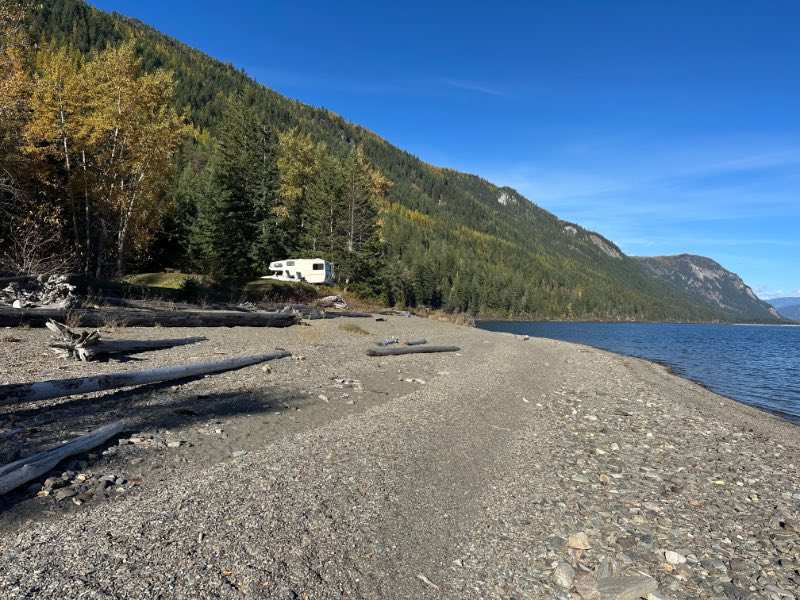
Late season bonus - got THE best spot at Lost Ledges campground on Kootenay Lake, BC.

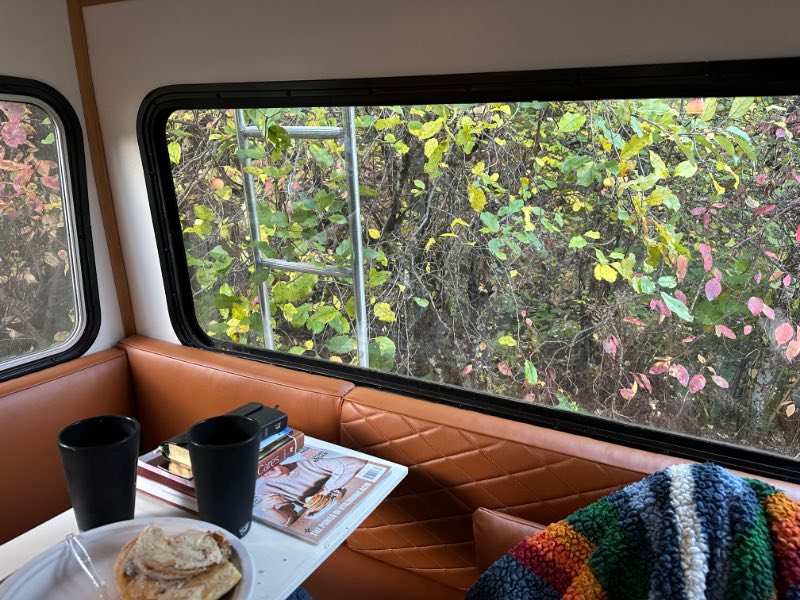
Pastries on the first morning - backed up to a creek:
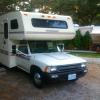
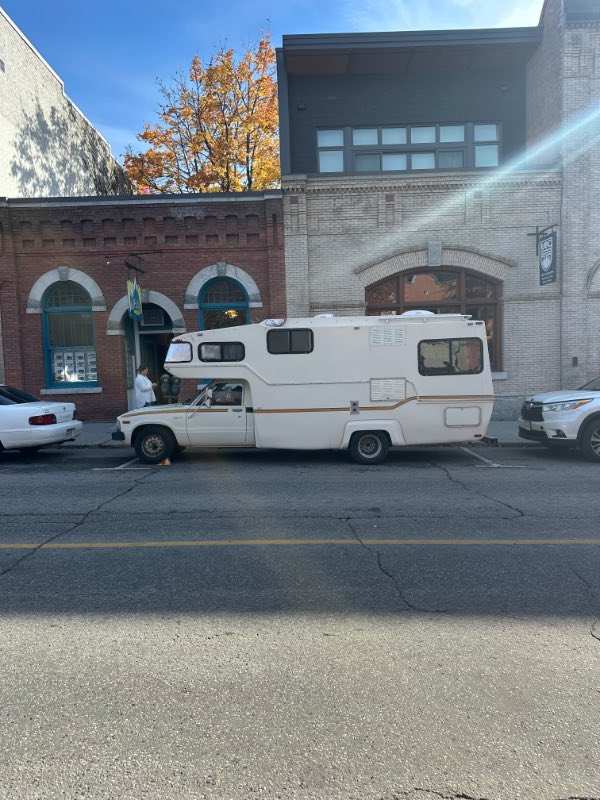
Fit into a normal parking space in Nelson, BC. Put the wedge by the tire as it's a steep hill and I don't trust the parking brake yet. Later drove over and crushed it, so I guess the parking brake is fine....:
Fi
-

 Fi
Fi
Forums
-
Toyota Motorhomes
-
- 53.9k
- posts
-
- 30.2k
- posts
-
- 9.7k
- posts
-
- 12.4k
- posts
-
- 8.4k
- posts
-
- 661
- posts
-
- 1.9k
- posts
-
- 680
- posts
-
- 851
- posts
-
- 274
- posts
-
- 1.1k
- posts
-
- 347
- posts
-
- 1.3k
- posts
-
- Still breathing
- By Totem,
-
- 1.6k
- posts
-
- 638
- posts
-




-
Recently Browsing 0 members
- No registered users viewing this page.
-
Forum Statistics
13.3k
Total Topics124.3k
Total Posts -
Gallery Statistics
3k
Images12.9k
Comments365
Albums