
-
Most Recent Three Posts
-
Very nice work on the tank repair—and some excellent info for others who may have such a job coming their way. Those new headlights look like very good quality... and we all know how much the old OEM units leave to be desired.
Enjoy that trip to the B.C. and be safe! Let us know how it all goes (including fuel mileage if you keep track?). -
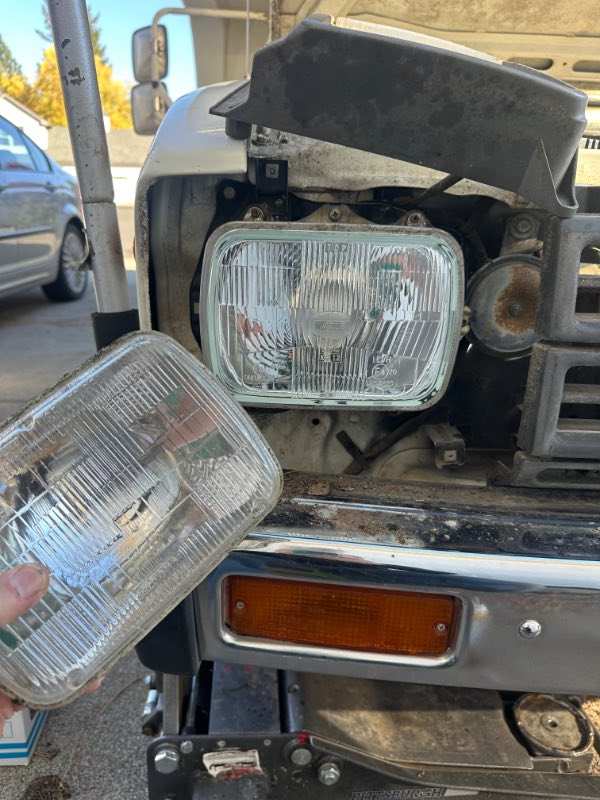
We are leaving tomorrow for our first "real" trip. Headed to British Columbia. So I prioritized getting a set of E Code headlamps installed today as we may be on secondary roads at night a few times. I just got back from adjusting them, and driving around the block, then several repeats to get them where I want them. Huge upgrade. They are Koito E Codes from Daniel Stern Lighting, and I also got a special pair of bulbs he has custom made in small batches to power them. I have not upgraded the stock wiring (yet) and the pattern is much broader like a modern car's. The power output 'feels and looks' like at least a 30% increase in lumens as well, though the bulbs draw only the stock 55/60 watts. Quality lenses and optics at work, I suppose. Definitely a win, and took only 20 minutes to swap them.

-
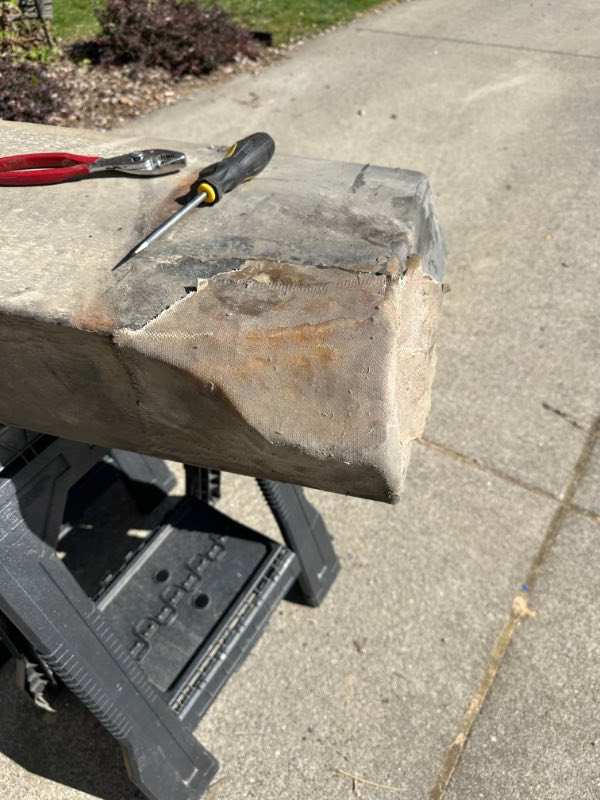
Agree. So the grey water tank leaked on our first trip. I pulled it to find prior damage repaired with fiberglas - which does not stick well to the Polyethylene these tanks are made of:
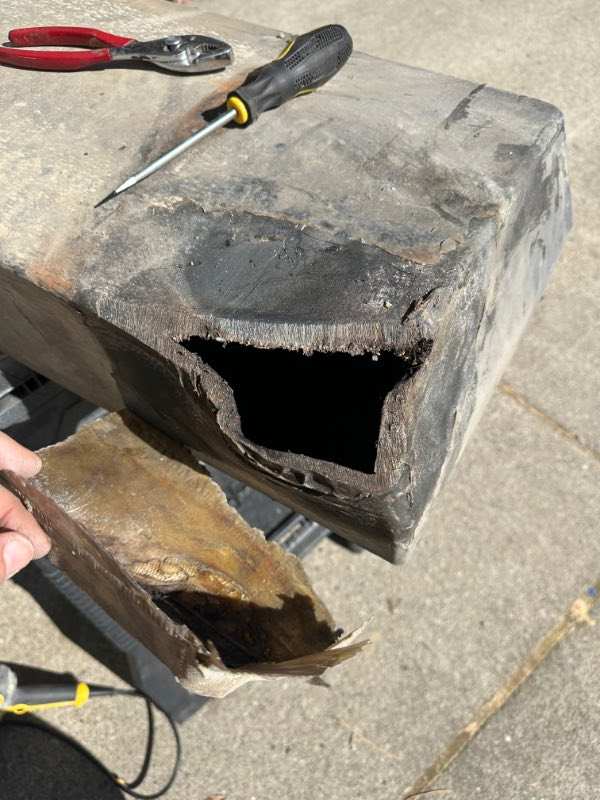
Huge hole - entire corner missing as if the tank strap failed and it dragged on the ground:
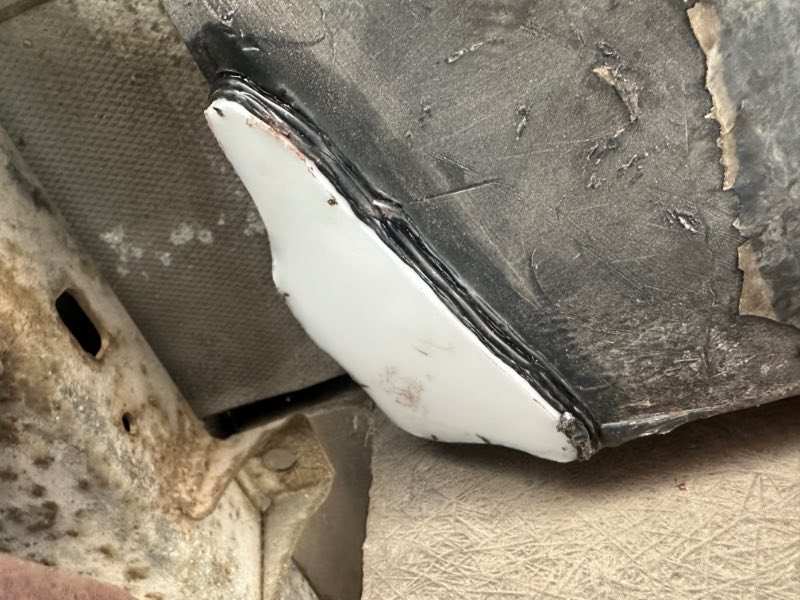
I used physics to determine the tank is Polyethylene (PE) after knowledgable folks insisted it was Polypropylene (PP). On research, PE sinks in vegetable oil, and PP floats. Then I ordered a plastic welding tool and PE plastic welding rods on Amazon. Luckily before welding it shut I tested the "PE" rods and found they were PP which will stick poorly and fail. Found another source, and the test confirmed it was the correct material. All cheap cutting boards were PE forever, but now they are all PP, so there is/has been an industry transformation and now PE is difficult to source. I needed a plate to used to patch the hole and made this discovery when the Amazon "PE" cutting board turned out to be PP, and I went to KMart, Target, Walmart etc and all their plastic cutting boards are also PP which is useless to me. So be advised if you try this at home, get your plastic patch and materials from a proper plastic supplier that knows the difference, which is where I found the white PE to use for a patch. The welding itself was actually quite fast and simple. I did a couple laps around, adding more material by melting the rods into the seam. We tested it with air pressure and it is air tight. And because I did the material research, I am very confident in the structural soundness as well:
-


-
Recently Browsing 0 members
- No registered users viewing this page.
-
Forum Statistics
13.3k
Total Topics124.3k
Total Posts -
Gallery Statistics
3k
Images12.9k
Comments365
Albums